




How does a Floating Labyrinth Seal perform in a dusty environment?
 Nov 04, 2026|
How does a Floating Labyrinth Seal perform in a dusty environment?
In industrial settings, especially those where machinery operates in dusty environments, the choice of an appropriate sealing solution is crucial. As a supplier of Floating Labyrinth Seals, I have witnessed firsthand the significance of this component in ensuring the smooth and efficient operation of various equipment. In this blog, I will explore how a Floating Labyrinth Seal performs in a dusty environment and why it is a reliable choice for many applications.
Understanding the Floating Labyrinth Seal
A Floating Labyrinth Seal is a type of non - contacting seal that uses a series of chambers and fins to create a tortuous path for the fluid or gas trying to escape. The "floating" feature allows the seal to self - adjust according to the shaft's movement, reducing the risk of wear and tear and ensuring a consistent sealing performance. The principle behind its operation is based on creating a series of pressure drops as the fluid or gas passes through the labyrinth, which effectively reduces the leakage rate.
Performance in a Dusty Environment
Dust Exclusion
One of the primary challenges in a dusty environment is to prevent dust particles from entering the machinery. The Floating Labyrinth Seal excels in this regard. The tortuous path created by the labyrinth design acts as a natural barrier for dust. As the dust - laden air tries to enter the sealed area, the multiple chambers and fins force the air to change direction repeatedly. This causes the dust particles, which are heavier than the air, to settle out due to inertia. The floating nature of the seal also helps in maintaining a consistent gap between the seal and the shaft, preventing dust from bypassing the seal through any irregularities in the shaft's movement.
Resistance to Abrasion
Dust particles can be highly abrasive, and they can cause significant damage to the sealing components over time. The Floating Labyrinth Seal is designed to withstand this abrasion. The materials used in its construction are carefully selected for their hardness and wear - resistance properties. For example, some seals are made from high - strength alloys or ceramics that can resist the erosive effects of dust. Additionally, since the seal is non - contacting, there is no direct rubbing between the seal and the shaft, which further reduces the risk of abrasion.
Long - term Reliability
In a dusty environment, the reliability of the seal is of utmost importance. A malfunctioning seal can lead to contamination of the machinery's internal components, reduced efficiency, and even premature failure. The Floating Labyrinth Seal offers long - term reliability. Its self - adjusting feature means that it can adapt to changes in the operating conditions, such as thermal expansion or misalignment of the shaft. This ensures that the seal continues to perform effectively over an extended period, reducing the need for frequent replacements and maintenance.
Comparison with Other Sealing Solutions
Dry Gas Mechanical Seal
A Dry Gas Mechanical Seal is another popular sealing solution, but it may not be as effective as a Floating Labyrinth Seal in a dusty environment. Dry Gas Mechanical Seals rely on the close contact between two flat surfaces to achieve a seal. In a dusty environment, the dust particles can get trapped between these surfaces, causing wear and abrasion. This can lead to leakage and reduced performance. In contrast, the non - contacting nature of the Floating Labyrinth Seal makes it more resistant to the effects of dust.
Labyrinth Ring Seal
The Labyrinth Ring Seal is similar in concept to the Floating Labyrinth Seal, but the floating feature gives the latter an edge. Labyrinth Ring Seals have a fixed position relative to the shaft, which means that they may not be able to adjust to the shaft's movement as effectively. In a dusty environment where the shaft may experience vibrations or misalignment, the Floating Labyrinth Seal can maintain a better seal, preventing dust from entering the system.
Shaft Seal Assembly
A Shaft Seal Assembly may consist of multiple components, and its performance in a dusty environment depends on the individual components' design. However, many shaft seal assemblies have contacting parts that can be damaged by dust particles. The Floating Labyrinth Seal's non - contacting design eliminates this risk, making it a more suitable choice for dusty environments.
Flexible Brush Seal
A Flexible Brush Seal uses bristles to create a seal. While it can provide good sealing performance in some applications, it may be less effective in a dusty environment. Dust particles can get trapped in the bristles, reducing their flexibility and sealing ability. The Floating Labyrinth Seal, on the other hand, does not have this problem due to its non - contacting and labyrinth - based design.
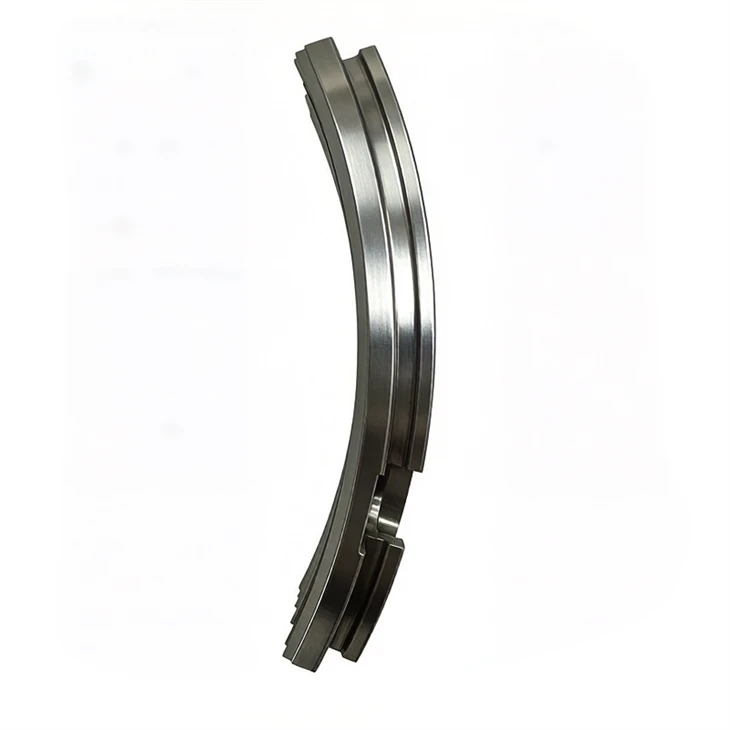

Applications in Dusty Environments
The Floating Labyrinth Seal finds applications in various industries where dusty conditions are prevalent. In the mining industry, for example, it can be used in conveyor systems, crushers, and mills to prevent dust from entering the bearings and other critical components. In the cement industry, it is used in kilns and other equipment to ensure that the internal parts remain clean and free from dust contamination. In the power generation industry, especially in coal - fired power plants, the Floating Labyrinth Seal can be used in fans and pumps to protect the machinery from the abrasive effects of coal dust.
Conclusion
In conclusion, a Floating Labyrinth Seal performs exceptionally well in a dusty environment. Its ability to exclude dust, resist abrasion, and provide long - term reliability makes it a superior choice compared to many other sealing solutions. If you are looking for a reliable sealing solution for your equipment operating in a dusty environment, I encourage you to consider our Floating Labyrinth Seals. We have a wide range of products to meet your specific requirements, and our team of experts can provide you with the technical support you need. Contact us for more information and to start a procurement discussion about how our seals can enhance the performance and longevity of your machinery.
References
- "Sealing Technology Handbook" by John A. Schey
- Various industry research reports on sealing solutions for dusty environments