




Can Labyrinth Ring Seals be used in vacuum applications?
 Aug 03, 2026|
Can Labyrinth Ring Seals be used in vacuum applications?
In the realm of industrial sealing solutions, the question of whether labyrinth ring seals can be effectively used in vacuum applications is a topic of significant interest. As a leading supplier of Labyrinth Ring Seal, I am often asked about the suitability of these seals for vacuum environments. In this blog post, we will explore the characteristics of labyrinth ring seals, the challenges of vacuum applications, and determine whether they can indeed be used in such settings.
Understanding Labyrinth Ring Seals
Labyrinth ring seals are a type of non - contacting seal that rely on a series of grooves and ridges to create a tortuous path for the fluid or gas trying to pass through. This design principle works on the basis of creating multiple expansion and contraction chambers, which cause a reduction in the pressure and flow rate of the medium as it traverses the seal.
The construction of labyrinth ring seals typically involves precision - machined rings made from materials such as stainless steel, brass, or other alloys depending on the application requirements. The rings are usually arranged in a concentric manner, with the labyrinth channels carefully engineered to optimize the sealing performance.

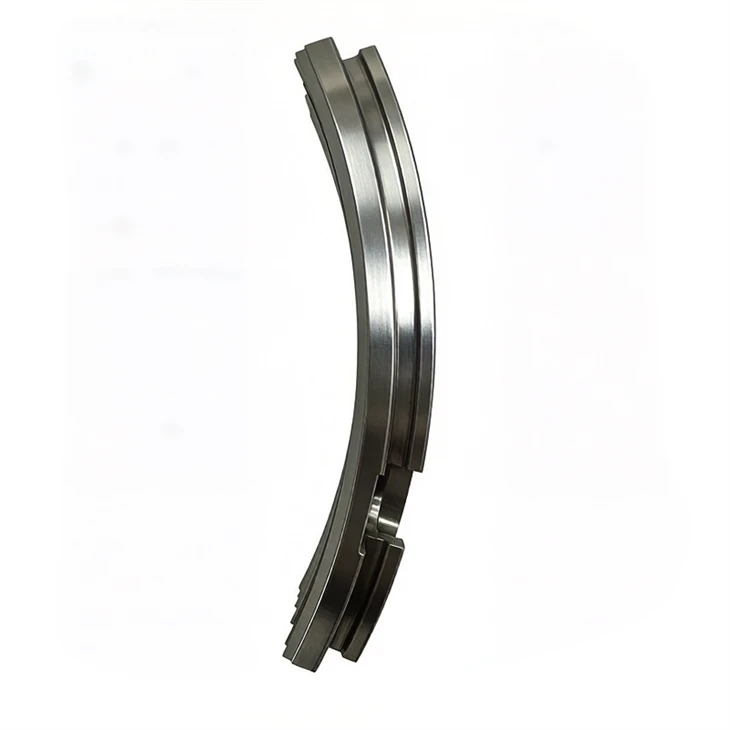
One of the key advantages of labyrinth ring seals is their non - contacting nature. Since there is no physical contact between the rotating and stationary parts, there is minimal wear and tear, which translates to a longer service life and reduced maintenance requirements. Additionally, they can operate at high speeds without the risk of overheating or excessive friction.
Challenges in Vacuum Applications
Vacuum applications present a unique set of challenges for sealing systems. In a vacuum environment, the pressure differential between the inside and outside of the system is significant. The goal of a seal in a vacuum application is to prevent the ingress of air or other gases into the vacuum chamber while maintaining the integrity of the vacuum.
One of the main challenges is achieving a high - level of sealing efficiency. Even a small leak can disrupt the vacuum and compromise the performance of the entire system. Another challenge is dealing with the outgassing of materials. In a vacuum, materials can release gases that were previously absorbed or trapped, which can contaminate the vacuum environment.
Can Labyrinth Ring Seals be Used in Vacuum Applications?
The answer to whether labyrinth ring seals can be used in vacuum applications is not a straightforward yes or no. It depends on several factors, including the level of vacuum required, the nature of the process, and the specific design of the labyrinth seal.
Positive Aspects
- Non - Contacting Design: The non - contacting nature of labyrinth ring seals is an advantage in vacuum applications. Since there is no physical contact, there is no generation of particles due to friction, which can be a major concern in clean vacuum environments such as semiconductor manufacturing.
- High - Speed Operation: Labyrinth ring seals can operate at high speeds, which is beneficial in applications where rotating equipment is used in a vacuum. For example, in vacuum pumps or centrifuges, the ability to maintain a seal at high rotational speeds is crucial.
- Reduced Wear: The minimal wear and tear of labyrinth ring seals mean that they can provide a reliable sealing solution over a long period of time. This is important in vacuum applications where frequent maintenance or seal replacement can be costly and time - consuming.
Limitations
- Sealing Efficiency: While labyrinth ring seals can provide a certain level of sealing, they may not be able to achieve the extremely high - vacuum levels required in some applications. In very high - vacuum environments, additional sealing mechanisms such as Flexible Brush Seal or Shaft Seal Assembly may be needed to supplement the labyrinth seal.
- Outgassing: The materials used in labyrinth ring seals can outgas in a vacuum environment. This can be a problem in applications where a clean vacuum is essential. Careful selection of materials with low outgassing properties is necessary to minimize this issue.
Case Studies
To illustrate the use of labyrinth ring seals in vacuum applications, let's look at a few case studies.
In a vacuum coating system, labyrinth ring seals were used to seal the rotating shaft of the coating chamber. The system required a moderate vacuum level, and the labyrinth ring seals were able to provide an effective seal. The non - contacting design ensured that there was no generation of particles that could contaminate the coating process. Over a period of several months, the seals showed minimal wear, and the vacuum level was maintained within the acceptable range.
However, in a high - energy particle accelerator, which requires an ultra - high vacuum, labyrinth ring seals alone were not sufficient. The accelerator used a combination of labyrinth ring seals and magnetic fluid seals to achieve the required vacuum level. The labyrinth ring seals provided a preliminary level of sealing, while the magnetic fluid seals provided the high - performance sealing needed for the ultra - high vacuum environment.
Conclusion
In conclusion, labyrinth ring seals can be used in vacuum applications, but their effectiveness depends on the specific requirements of the application. For moderate - vacuum applications where high - speed operation and low wear are important, labyrinth ring seals can be a viable option. However, for ultra - high vacuum applications, additional sealing mechanisms may be necessary.
As a supplier of Labyrinth Ring Seal, we have the expertise and experience to provide customized sealing solutions for vacuum applications. Our team of engineers can work with you to understand your specific needs and design a labyrinth ring seal that meets your requirements.
If you are considering using labyrinth ring seals in your vacuum application, we encourage you to contact us for a consultation. We can provide you with detailed information about our products, their performance in vacuum environments, and how they can be integrated into your system. Let's work together to find the best sealing solution for your vacuum application.
References
- "Sealing Technology Handbook", John Wiley & Sons
- "Vacuum Technology Basics", Leybold Vacuum